At 54, People Compliment My Legs Like I’m 30 Again
Two years ago I was hiding my heavy, swollen, veiny legs under trousers — even in summer. I blamed my age. Then a nurse explained the one thing no doctor ever had, and it had almost nothing to do with how old I am.
For about three years, I could tell you the time of day without looking at a clock. I only had to notice my legs.
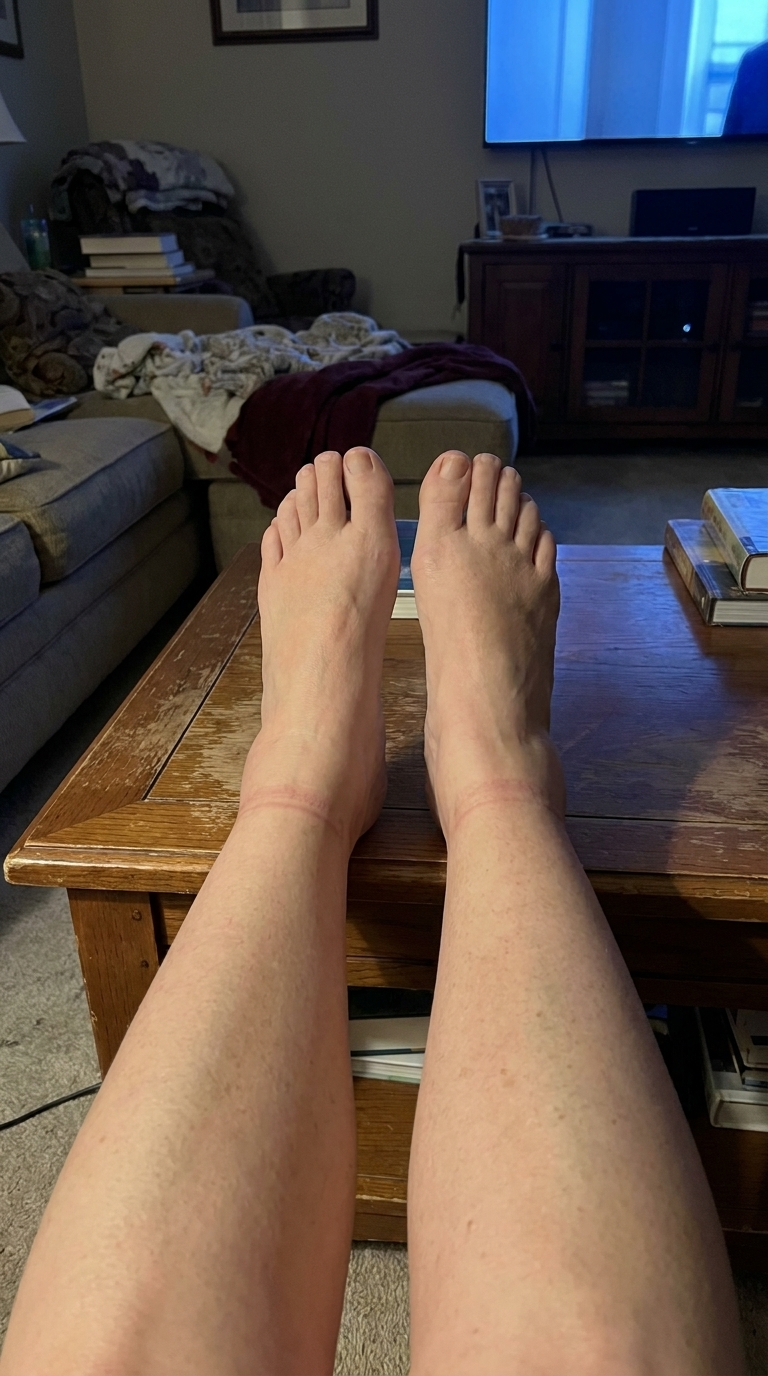
By two in the afternoon they started to feel full. By five they were heavy, swollen and aching — like someone had quietly poured wet sand into my calves while I wasn’t paying attention. I’d come home, lower myself onto the couch, and prop my feet up on the coffee table just to get through the evening.
When I peeled my socks off at night, there was a deep red groove pressed into each ankle. Some mornings it was still there.
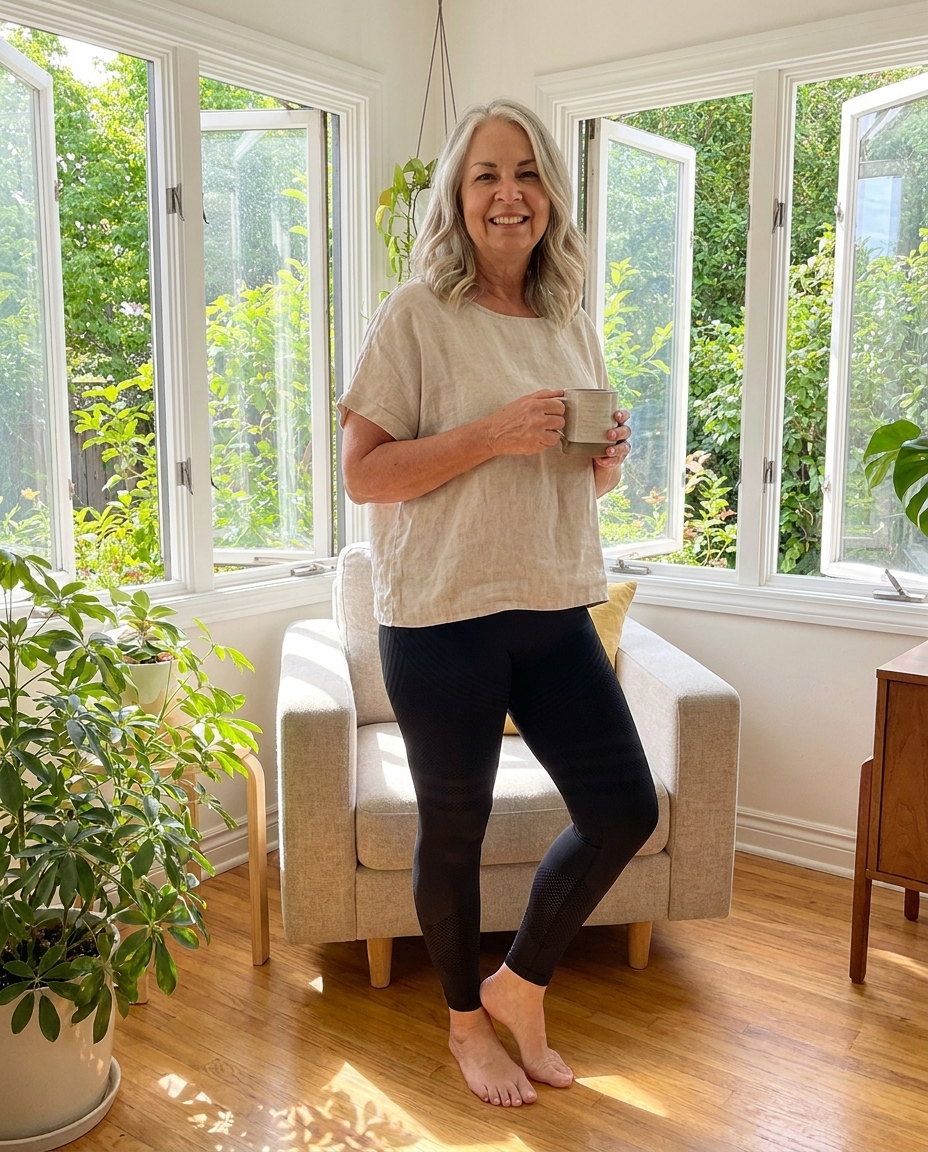
I’m 54. I still work on my feet most of the day — and for a long time I was certain this was simply what happens to a woman’s legs once she hits “a certain age.”
I was wrong. And the day I found out why was the day everything started to change.
“It’s just your age”
I want to tell you about the lowest point first, because if your legs feel anything like mine did, you’ll recognize it.
I’d stopped wearing skirts. I hadn’t put one on in nearly four years — long trousers even in the summer, because I didn’t want anyone to see the swelling, or the little blue and purple veins that had started creeping up the sides of my calves.
I planned my whole day around how long I’d be on my feet. A full shift at work, the grocery run, standing at the counter making dinner — all of it came with a price I paid by evening.
I finally booked a specialist. I waited six weeks. He looked at my legs for about eleven minutes, told me it was “normal at my age,” suggested I keep wearing compression socks, and sent me off with a $230 bill.
I left that office and cried in my car. Not because anything was seriously wrong — but because someone had just told me that feeling like this was simply my new normal. For the rest of my life.
Everything I tried — and why none of it worked
I’m not someone who gives up easily. Over those three years, I tried nearly all of it:
- Compression socks. Three different pairs. They squeezed my ankle so hard they hurt, took ten minutes of wrestling to pull on, rolled down by lunch, and did nothing for the heaviness higher up in my calves. Beige and medical-looking — so most days they sat in the drawer.
- Creams and gels. A $29 tube of horse-chestnut cream that gave a nice cooling tingle — on the surface. The problem was never on the surface.
- “Circulation” supplements. $49 a month. I’d forget half of them and was never once sure they’d done a thing.
- Legs up the wall. It helped for about an hour. By morning the heaviness was right back.
What I didn’t understand then is that every one of those was aimed at the wrong thing. I wasn’t doing it wrong. I was treating the wrong mechanism entirely.
I only learned that because of my niece.
The nurse who finally told me the truth
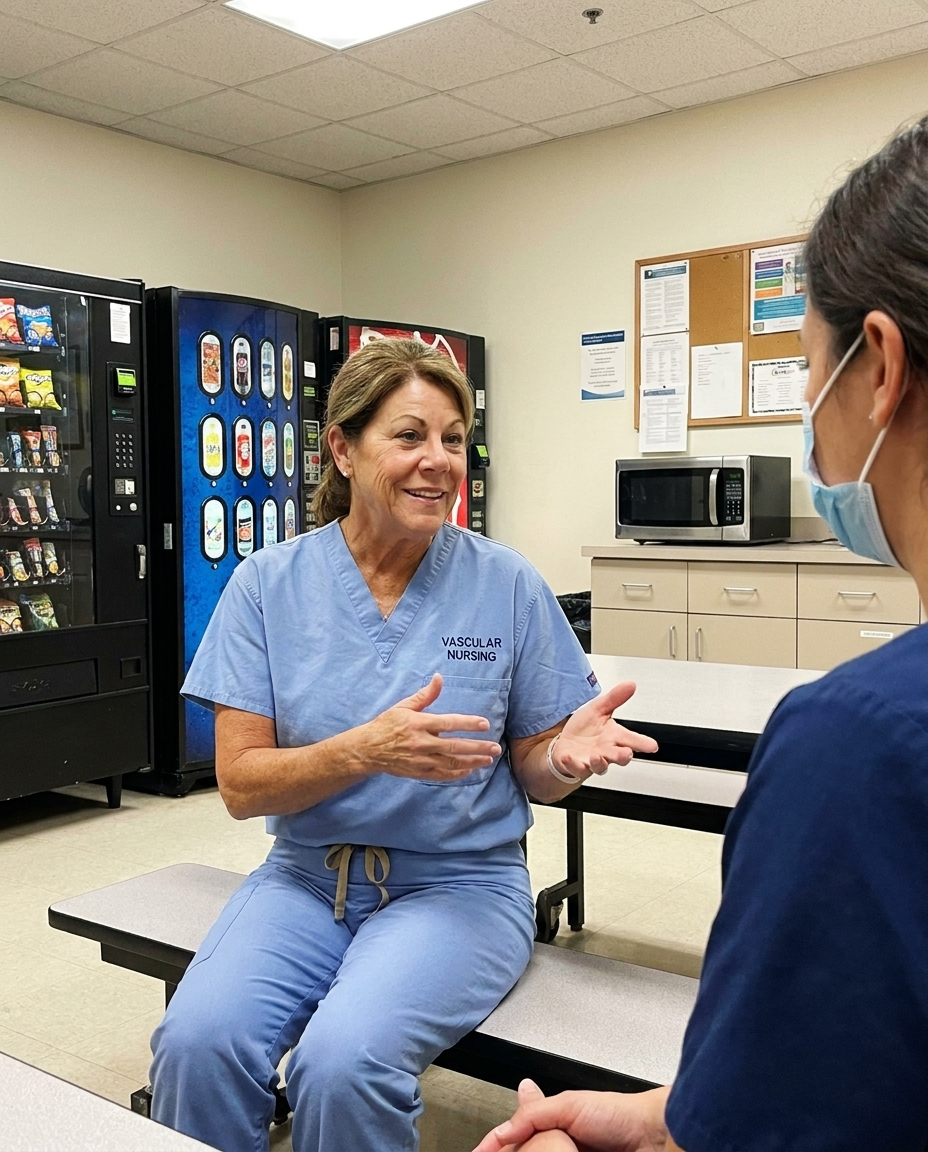
My niece is a vascular nurse. She spends twelve-hour shifts helping people with exactly these problems. At a family lunch she watched me shift in my seat and rub my calf without even realizing I was doing it.
She said something I’ve never forgotten:
“Aunt Carol, your problem isn’t really your veins. It’s your calf pump.”
Then she explained it in a way no doctor ever had.
Your calf is a “second heart”
All day long, gravity pulls the blood in your body down into your legs. That part is easy — it just falls.
The hard part is getting it back up to your heart, against gravity. And your body doesn’t do that with your heart. It does it with your calf muscles. Every time you take a step, your calf squeezes like a fist and pushes the blood upward. Doctors actually call your calves your “second heart.”
Here’s the part that mattered for me: after about the age of 40 — especially if you spend hours sitting or standing — that second heart gets weaker and slower. The blood doesn’t get pushed up the way it used to. So it pools at the bottom of your legs.
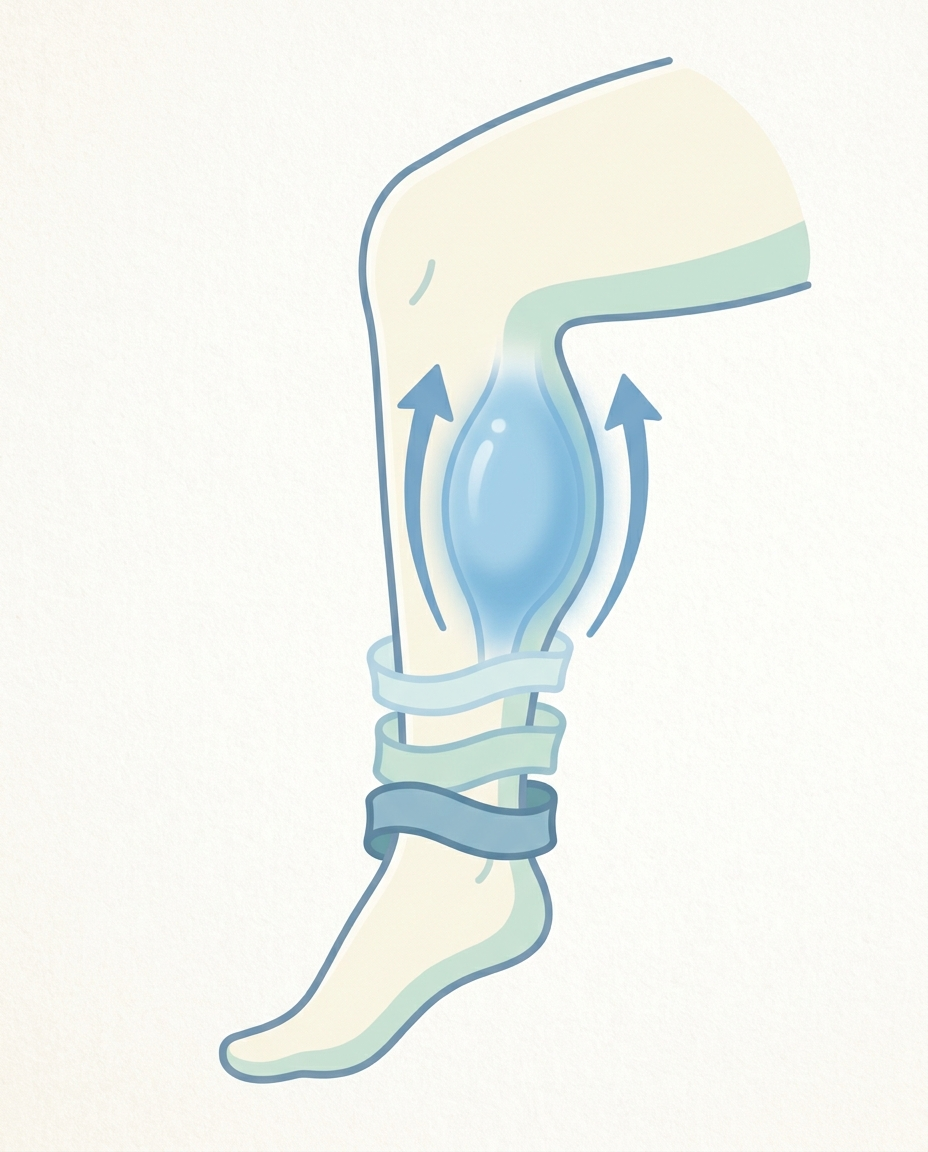
That pooling is the swelling. It’s the heaviness. It’s the pressure that pushes those little veins to the surface. It was never water weight, and it was never just “getting old.” It was a pump that had quietly slowed down.
And suddenly every one of my failures made sense:
- Compression socks only squeeze the ankle — the one place that wasn’t really the problem. They never work the calf.
- Creams sit on top of the skin. The pooling is deep inside.
- Pills can’t squeeze a muscle.
“So what actually helps?” I asked her. She told me the goal was simple: support that second heart so it can push the blood back up again — over the whole leg, not just the ankle. And the easiest way she’d seen people do it wasn’t a sock, a cream or surgery.
It was a legging.
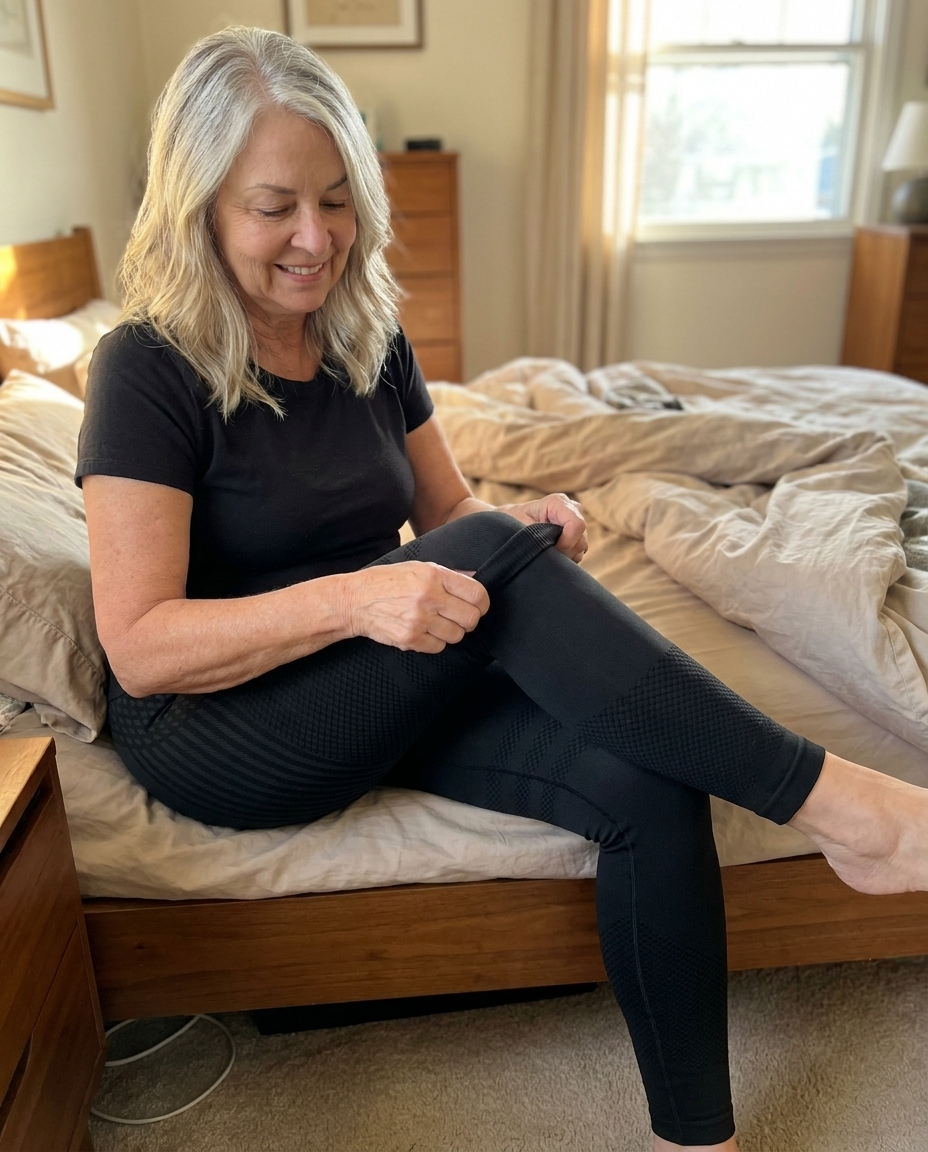
Why a legging — and not the socks I already hated
She pointed me toward a 3D-knit compression legging from a small company called VELORA. I’ll be honest — I almost didn’t bother. I’d given up on compression years ago.
But this was nothing like the socks.
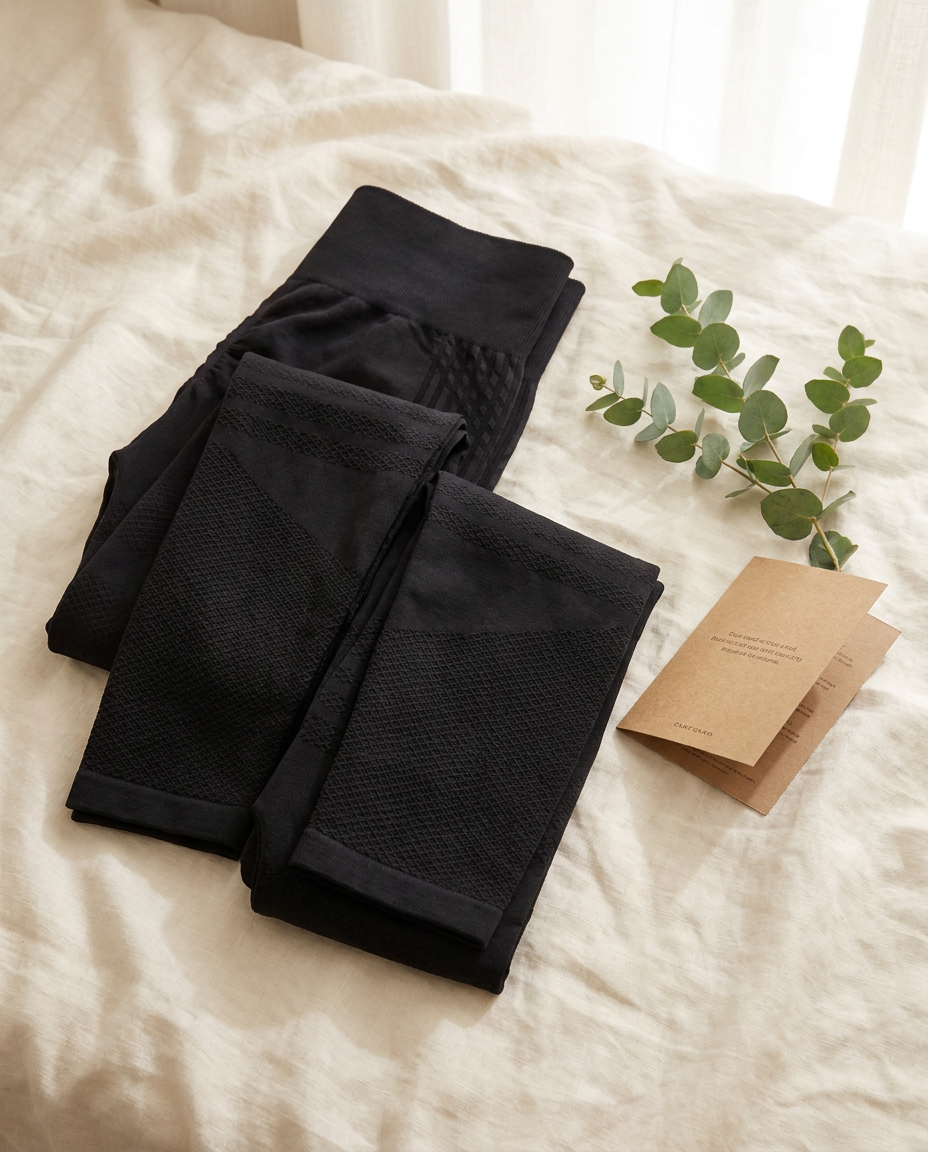
Instead of one tight band choking my ankle, it has graduated compression bands running all the way up — firmest at the ankle, easing gently as they go up the calf and thigh. You can actually see them in the knit. That gentle, graduated squeeze is exactly what works with the second-heart pump instead of against it: every step you take, the legging helps push the blood up the leg. Walking becomes the pump again.
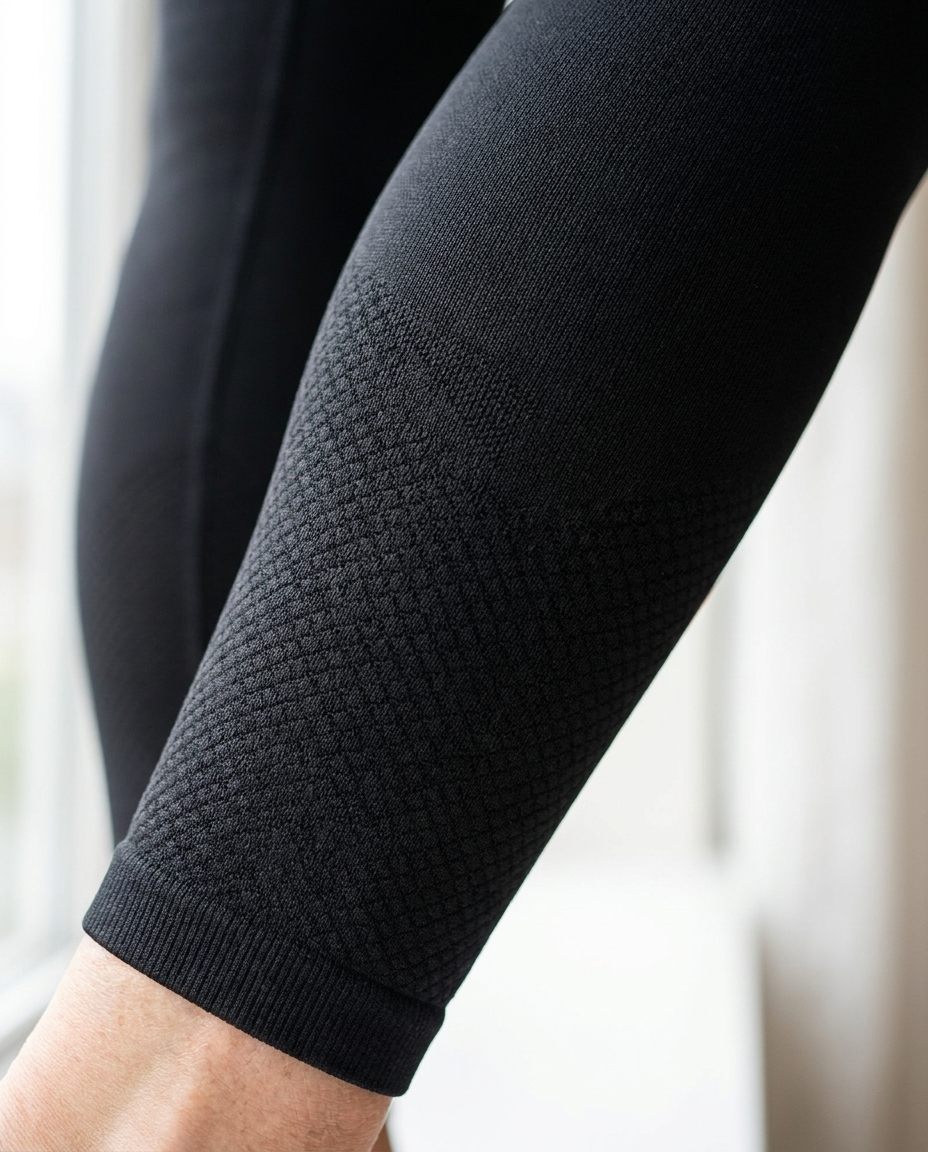
Woven right into the fabric — not printed on top — are hundreds of tiny raised points, a kind of 3D micro-massage knit. On the leg it feels like a constant, gentle massage rather than a clamp.
And here’s the part that mattered most, the part the beige socks never got right: I actually wanted to wear it. It’s a real, opaque, breathable black legging. It pulls on easily. It doesn’t bite, roll or itch. It covers the whole leg — ankle to thigh — where the pooling (and, if I’m honest, the cellulite) actually lives.
Because the only compression that ever helps is the kind you keep on. Consistently.
“Graduated compression acts like a second heart for the legs — it supports the calf muscles in pushing blood back up toward the heart. The benefit comes from wearing it consistently.”— My niece, a vascular nurse · 12 years on the wardsSee if it’s right for your legs →Takes you to availability & today’s price
What actually happened to my legs
I won’t pretend it was magic overnight. It wasn’t.
Day one, I pulled them on in the morning and more or less forgot about them — until I realized at dinner that my legs didn’t feel heavy. That alone almost made me cry, in a good way this time.
By the end of the second week, the swelling at my ankles had visibly gone down. The red groove from my socks? Barely there anymore.
By day 30, light legs had become my new normal. I wasn’t propping my feet up every single evening. The skin on my thighs even looked a little smoother. And — this is the part I tell everyone — I wore a knee-length skirt to a friend’s wedding this summer. The first skirt I’d worn in four years.

I’m not telling you it will erase anything or cure anything. It’s a comfortable garment, not a medical procedure. What I can tell you is how my legs feel at the end of the day now versus how they felt for three years — and that difference is the reason I sat down to write this.
I’m clearly not the only one
When I went to order a second pair, I read a few of the reviews and got a little emotional — because they all sounded like me:
“I’m an ER nurse, on my feet 12 hours a day. For the first time in years my ankles aren’t swollen when I get home.”— Linda T., Ohio · ★★★★★ · Verified Buyer
“I was so skeptical after years of socks that did nothing. Three weeks in, my legs feel lighter than they have in a decade.”— Karen W., Ontario · ★★★★★ · Verified Buyer
“Finally, compression that doesn’t roll down — and that I actually want to wear. I bought a second pair the next week.”— Pauline W., hairdresser · Ohio · ★★★★★ · Verified Buyer
“But it’s summer — won’t a legging be too hot?”
I had the exact same thought. Then my niece said the thing that flipped it completely: summer is when your legs need this most.
When it’s hot, your veins widen to let heat escape — that’s your body cooling itself down. But wider veins, plus a calf pump that’s already slowed with age, means even more blood settles at the bottom of your legs. That’s why your ankles puff up on a warm afternoon. Why your legs feel like lead on holiday. Why your feet swell on a long summer flight or a hot car ride. Heat doesn’t give your legs a break — it’s when they struggle most.
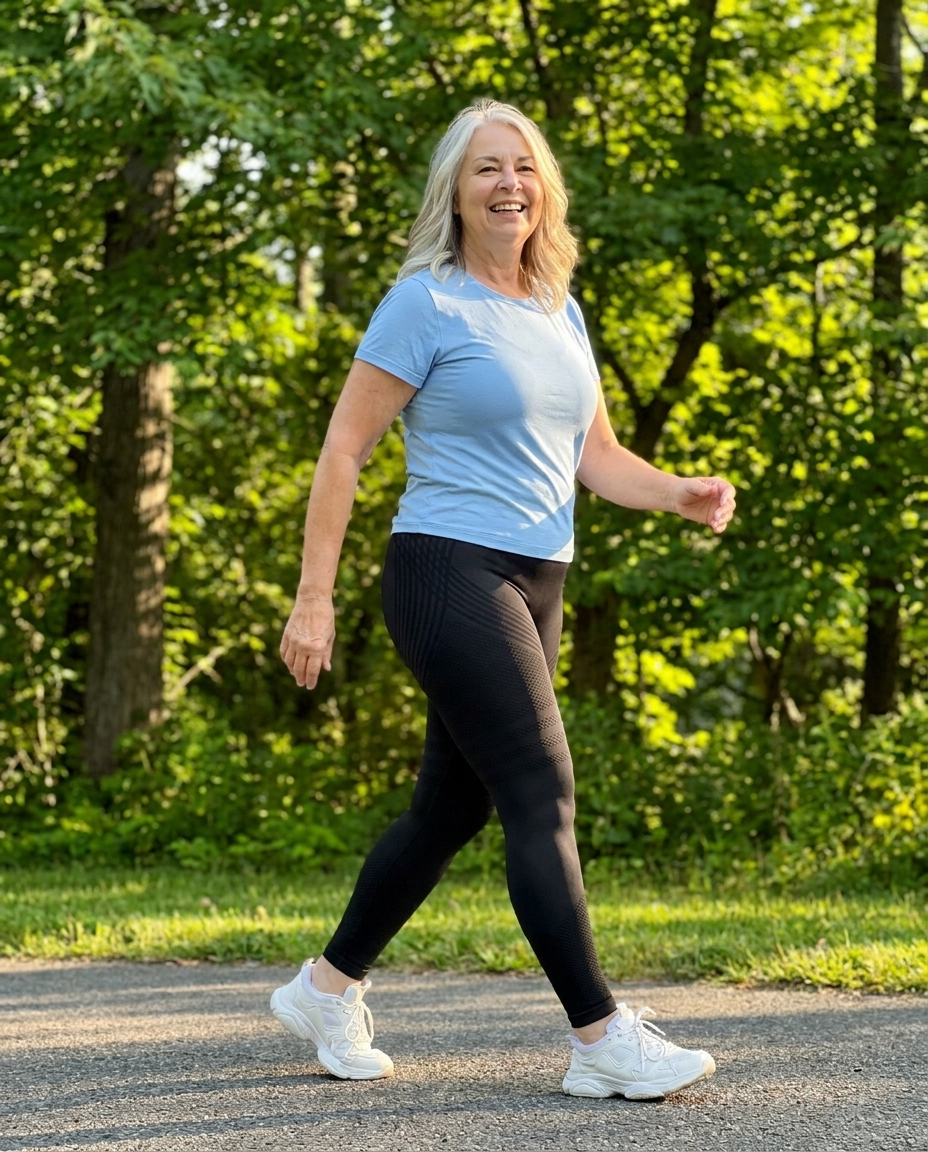
And this isn’t a thick winter stocking. It’s a light, breathable 3D-knit — thinner than the trousers I used to hide my legs under, it lets the skin breathe, and it disappears under a summer dress. Honestly? I wear mine more in July than in January.
A few honest answers
Is it hard to put on like compression socks?
No — that was the whole point for me. It pulls on like a normal legging.
Will it roll down?
It’s a full-leg, high-rib-waist legging, so there’s no band to roll.
Is it hot in summer?
It’s a light, breathable 3D-knit — thinner than trousers. See the section just above: in the heat your legs actually need the support more, not less.
What if it doesn’t work for me?
This is the part that made me comfortable trying it: a 90-day money-back guarantee. If your legs don’t feel lighter, you send them back and pay nothing.
If your legs feel like mine did
If you’ve been blaming your age — if you know the 5 p.m. heaviness, the sock groove, the swollen ankles, the skirts you’ve quietly stopped wearing — I’d gently suggest it might not be your age at all. It might just be a second heart that needs a little support.
I’ll be honest about one thing: they sell out often, and from what I understand they can’t always make them fast enough.
Right now the company is running a buy-one-get-one-free offer — which is how I ended up with a wash-and-wear rotation of two pairs for about the price of one. With the 90-day guarantee, trying a pair cost me nothing but the time it took to feel the difference.